For most UK kitchens, quartz offers the best all-round balance of durability, low maintenance and appearance, but it isn't the cheapest option, and laminate remains a genuinely sensible choice on a tighter budget. The right material depends on how you actually use your kitchen — heavy cooking and heat exposure, budget, and how much maintenance you're willing to do.
Laminate
Typical cost: £40–£120 per linear metre fitted. Laminate has improved enormously and modern options convincingly mimic stone or wood. It's scratch-resistant enough for normal use but not heatproof — always use a trivet or board, since a hot pan placed directly on it can cause permanent damage. It's the most budget-friendly option and a practical choice for rental properties, secondary kitchens, or tight renovation budgets.
Solid wood (oak, walnut, beech)
Typical cost: £100–£300 per linear metre fitted. Wood brings genuine warmth and character, and light scratches can be sanded out — a real advantage over stone and laminate. It needs regular oiling (roughly every 6–12 months) to stay water-resistant, and is more vulnerable around sinks if not sealed properly, where water can cause swelling or staining over time.
Granite
Typical cost: £150–£400 per linear metre fitted. Extremely hard-wearing and heat-resistant, granite handles hot pans and heavy chopping well. It needs sealing periodically (roughly annually) to resist staining, and every slab has natural variation, so it's worth seeing the actual slab before installation rather than relying on a sample chip.
Quartz (engineered stone)
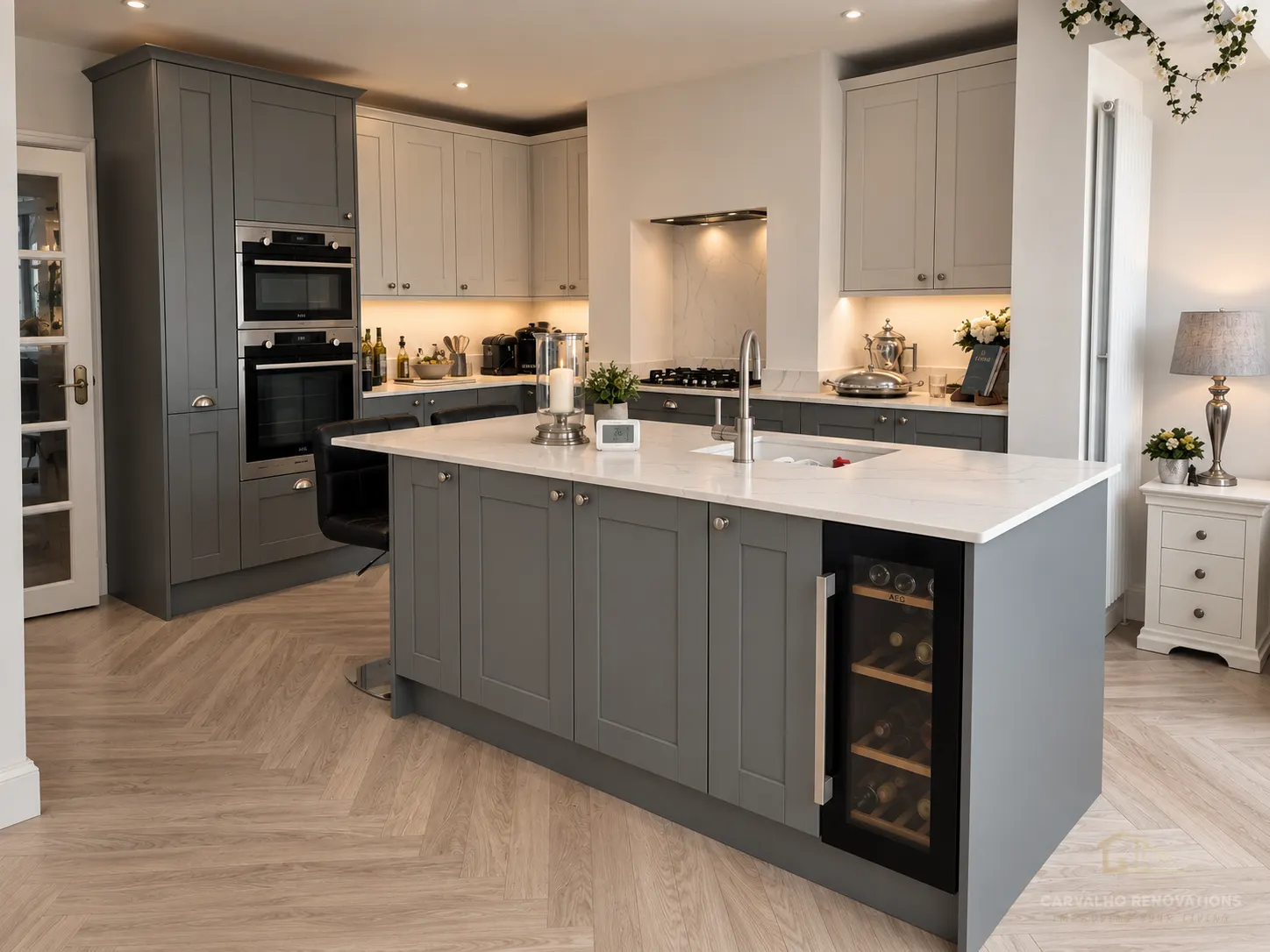
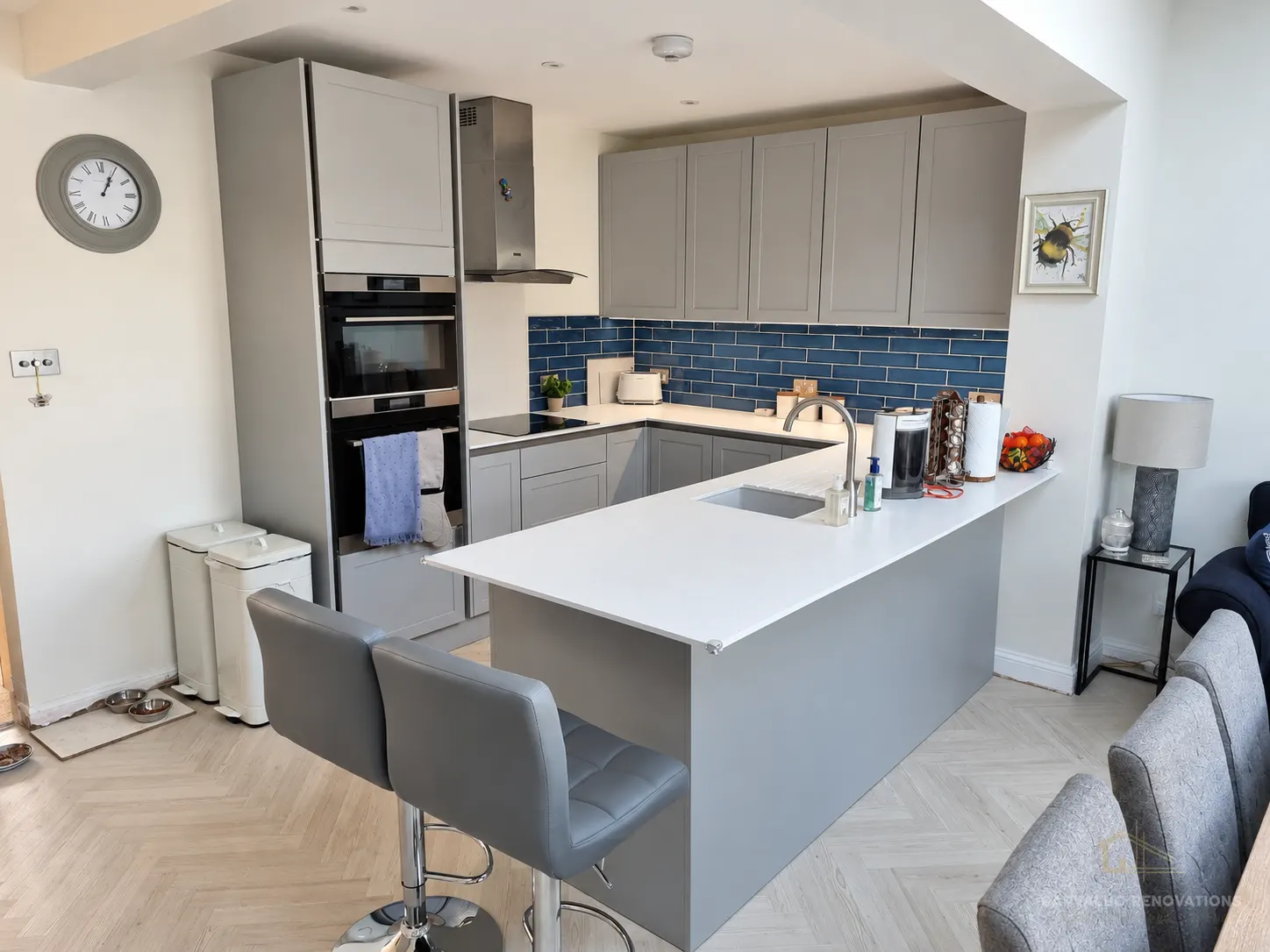
Typical cost: £200–£450 per linear metre fitted. Quartz is engineered from crushed stone and resin, giving a much more consistent pattern than granite, excellent scratch and stain resistance, and no sealing requirement. It's not fully heatproof — very high heat can cause discolouration — but for most households it needs the least ongoing maintenance of any stone-look option, which is why it's often the default recommendation where budget allows, and pairs well with a coordinated splashback.
Stainless steel
Typical cost: £200–£500+ per linear metre, often custom-fabricated. The professional-kitchen choice: fully heatproof, hygienic, and very durable, but it scratches visibly over time (which some people like, as a patina) and shows fingerprints and water marks readily.
How to choose
- Tight budget: laminate.
- Want low maintenance and a stone look: quartz.
- Want a unique, natural look and don't mind occasional sealing: granite.
- Want warmth and character, happy to oil periodically: solid wood.
- Heavy cooking, professional-style kitchen: stainless steel.
Whatever you choose, factor worktop cost into your overall budget alongside cabinetry — use our kitchen cost calculator for a full-project estimate.
Concrete and composite worktops
Poured concrete worktops are a less common but increasingly popular choice in the UK, typically costing £200–£450 per linear metre. They offer a genuinely unique, industrial-modern look and can be cast to almost any shape, but concrete is porous and needs sealing regularly to resist staining, and can develop hairline cracks over time as it cures and settles — it suits homeowners who are comfortable with some natural character rather than a perfectly uniform finish.
How much worktop do you actually need?
Worktop is priced per linear metre, but it is worth measuring generously: allow for any run behind a hob, any upstand (a short strip running up the wall behind the worktop), and any waste from cutting around sinks, hobs and corners. A kitchen fitter or supplier will usually template the exact shape before ordering stone worktops in particular, since these are cut to a precise pattern and cannot easily be trimmed on-site the way laminate can.
Edge profiles and finish
Beyond the material itself, the edge profile — square, bullnose (rounded), or a bevelled chamfer — affects both look and practicality. A rounded edge is generally more comfortable and safer around a busy kitchen, particularly with young children, while a square edge gives a cleaner, more contemporary line. Most fabricators offer a small range of standard profiles at no extra cost, with more elaborate detailing sometimes priced separately.
Matching worktop to cabinet style
A lighter worktop against dark cabinetry (or vice versa) tends to photograph and show well and is currently a popular contemporary choice, while a close tonal match between worktop and units gives a calmer, more unified look. There is no objectively "right" answer here — bring a real sample of your chosen cabinet finish when viewing worktop samples, since colours can look different under showroom lighting than they will in your own kitchen.
Sample before you commit
Always request a physical sample of any worktop material before ordering, ideally a piece large enough to view under your own kitchen lighting at different times of day. Photographs and small swatches on a supplier website rarely capture the true colour and pattern variation, particularly for natural stone.
Related reading: planning your kitchen lighting.
Frequently asked questions
Related calculators
Related services
See our work
Related articles
Kitchen Splashback Materials Compared: Tile, Glass, Acrylic
Tile, glass and acrylic splashbacks each look and perform differently behind a hob and sink — here's the practical comparison.
Kitchen Lighting Ideas and Costs: Task, Ambient and Feature Lighting
A well-lit kitchen usually combines task, ambient and feature lighting rather than relying on one central ceiling light. Here's what each layer costs and does.
Kitchen Cabinet Refacing vs Full Kitchen Replacement: Which Should You Choose?
Refacing cabinet doors can transform a kitchen's look for a fraction of the cost of a full replacement — but it isn't right for every situation.
Choosing worktops for a new kitchen?
Carvalho Renovations can talk you through the right worktop material for your budget and how you actually use your kitchen.
Get a Free Quote