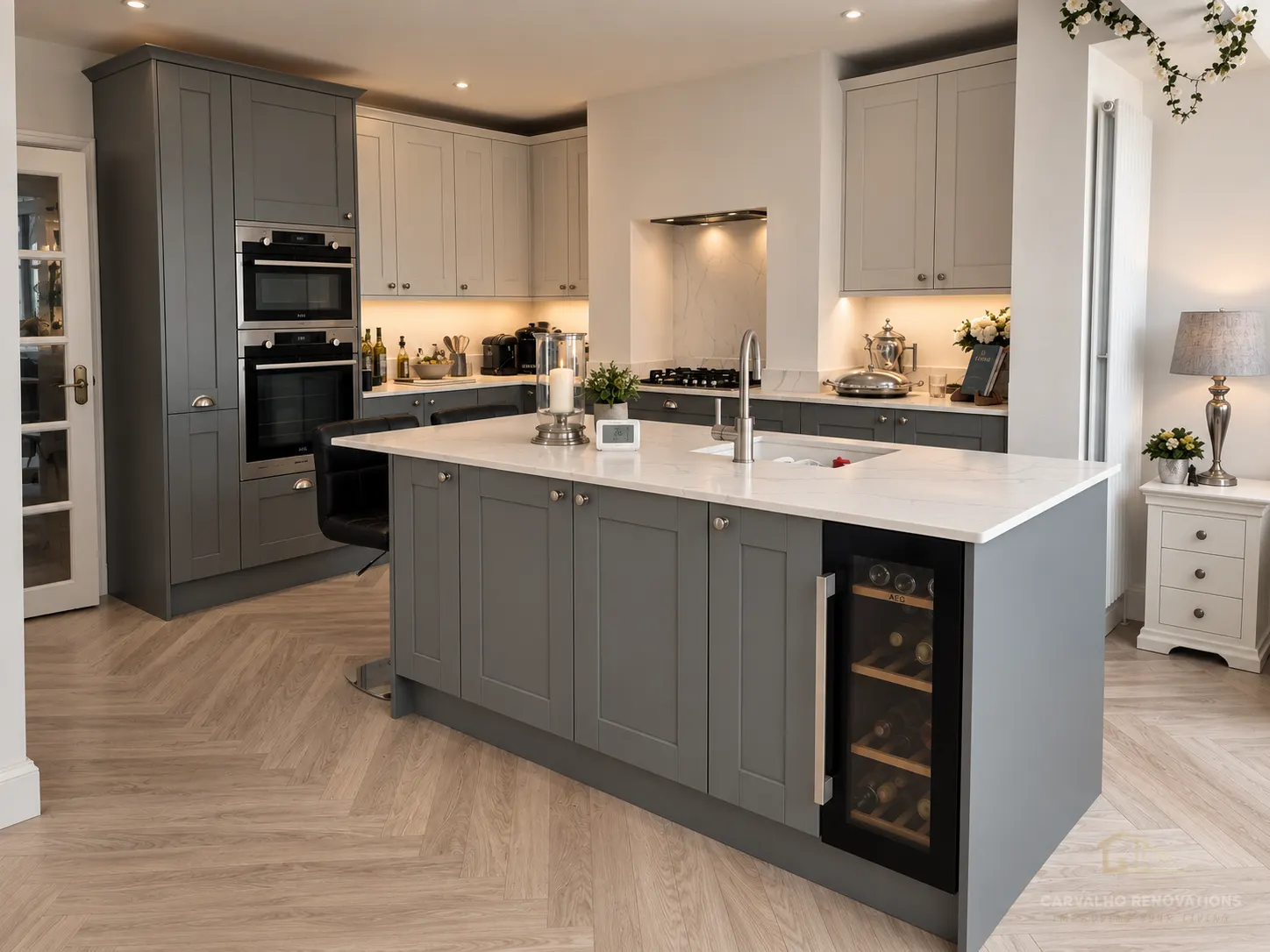
A well-lit kitchen almost always combines three layers rather than relying on a single central ceiling light: task lighting (bright, focused light where you actually work), ambient lighting (general background light for the whole room), and feature lighting (decorative light that adds atmosphere, often over an island or dining area). Getting all three right typically costs anywhere from a few hundred pounds for a modest LED downlight and under-cabinet upgrade, to £1,000-£2,000+ for a full rewire and lighting scheme in a larger kitchen.
Task lighting
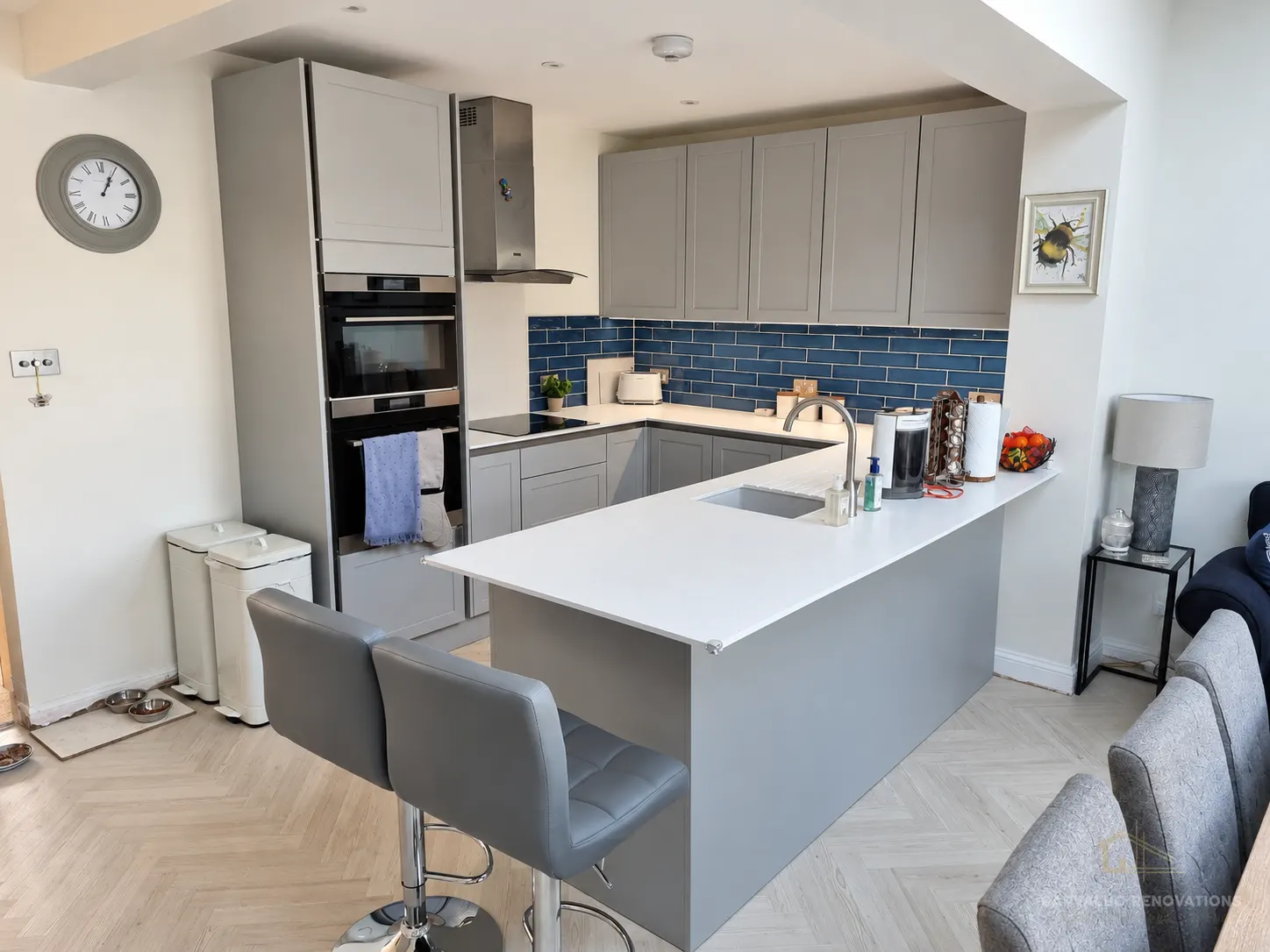
This is the lighting that actually helps you cook and prepare food safely — under-cabinet LED strips illuminating the worktop, and downlights positioned directly over the hob and sink, are the two most common examples. Under-cabinet LED strip lighting is relatively inexpensive to add, often £15-£40 per metre for the strip itself plus fitting, and makes a genuinely noticeable difference since a standard ceiling light often leaves the worktop in your own shadow while you're working at it.
Ambient lighting
This is the general, even light that fills the room — typically a run of ceiling downlights (LED spotlights recessed into the ceiling) spaced evenly across the kitchen. Budget roughly £30-£60 per downlight including fitting for a standard installation, though the total obviously scales with how many you need. Dimmable downlights are worth the small extra cost, since a kitchen often needs bright light for cooking and softer light for eating or entertaining.
Feature lighting
This is the lighting that adds character rather than pure function — pendant lights over an island or breakfast bar are the classic example, along with statement fittings over a dining table in an open-plan space. Pendants range enormously in price depending on style, from £30 for a simple fitting to several hundred pounds for a designer piece, and typically need a dedicated electrical point positioned precisely over the island or table.
Choosing the right colour temperature
LED lighting is sold by colour temperature, measured in Kelvin (K), and getting this right makes a real difference to how a kitchen feels. Warm white (around 2700K-3000K) gives a cosier, more relaxed feel, similar to traditional incandescent bulbs, and suits ambient and feature lighting. Cool or daylight white (4000K-5000K) is crisper and more energising, and is often preferred for task lighting over worktops and the hob where accurate colour and clear visibility matter, for instance when checking food is properly cooked. Mixing warm ambient light with cooler task lighting is common and works well, but mixing warm and cool light within the same layer (for example two different colour temperatures of downlight in the same run) tends to look inconsistent and is worth avoiding.
Switch placement matters too
It's easy to focus entirely on the fittings themselves and forget switch placement, but a well-planned kitchen usually has separate switches for each lighting layer positioned somewhere genuinely convenient — by the main entrance for ambient lighting, and ideally a two-way switch if the kitchen has more than one entry point, so you're not walking across a dark room to turn the lights on. Under-cabinet lighting is often run on its own switch or even a plug-in transformer with a small in-line switch, which makes it easy to leave on as a low-level night light without lighting the whole room.
Planning the electrics
If you're renovating the kitchen anyway, it's far more cost-effective to plan the full lighting scheme (and the sockets and switches to control each layer independently) before first-fix electrics are done, rather than adding lighting as an afterthought once walls and ceilings are finished. Retrofitting downlights into an existing ceiling, or adding a new pendant point where there wasn't one, generally costs more than including it in an initial rewire.
Common mistakes
- Relying on one central light only. This leaves worktops in shadow and gives the room a flat, uninviting feel in the evening.
- Not using separate switches or dimmers for each layer. Being able to dim ambient lighting while keeping task lighting bright is genuinely useful day to day.
- Positioning under-cabinet lighting behind the cabinet lip. It needs to sit where it actually illuminates the worktop, not hidden where you can't see the light itself glaring, but also not so exposed it's visible and unattractive.
For the cost of a full kitchen renovation including electrics, see kitchen renovation labour costs explained, and if you're adding an island as a feature-lighting focal point, see our guide to kitchen island costs.
Frequently asked questions
Related services
See our work
Related articles
Kitchen Island Cost: Is It Worth Adding One?
A kitchen island typically costs £1,500-£8,000+ depending on size, worktop material and whether it needs plumbing or electrics. Here's what drives the price and whether it's worth it.
Kitchen Renovation Labour Costs Explained
In most kitchens, labour is a smaller share of the total than the units and appliances themselves — here's what a kitchen fitter's time actually costs, and why.
Kitchen Cabinet Refacing vs Full Kitchen Replacement: Which Should You Choose?
Refacing cabinet doors can transform a kitchen's look for a fraction of the cost of a full replacement — but it isn't right for every situation.
Planning your kitchen lighting scheme?
Carvalho Renovations can design and install a full task, ambient and feature lighting scheme as part of your kitchen renovation.
Get a Free Quote