Kitchen renovation labour is one of the more misunderstood parts of a project's cost, mainly because it's genuinely a smaller share of the total than most people expect — unlike almost any other room, the units and appliances usually cost more than the work to fit them.
What kitchen fitting labour actually covers
- Strip-out and disposal of the existing kitchen
- Unit and worktop installation — levelling, joining, fitting
- Plumbing — connecting the sink, dishwasher, washing machine, and any relocation
- Electrical work — appliance circuits, socket positions, lighting
- Tiling or splashback fitting, if included
- Appliance installation and testing
- Making good — final finishing around units, walls and flooring junctions
Roughly how long each stage takes
For a straightforward kitchen with no layout changes, a fitter's time typically breaks down something like this: one day for strip-out, one to two days for first-fix plumbing and electrical, three to five days for unit and worktop fitting, and one to two days for second-fix and finishing. A layout change or an island with its own services adds real time to the first-fix stage specifically — that's usually where an underestimated quote goes wrong.
Why labour is a smaller share than you might expect
See our full breakdown in Labour vs Materials — kitchens are one of the most materials-weighted project types in the whole house, because cabinetry, worktop and appliance cost usually outweighs the labour to install them. That doesn't mean labour is unimportant — a poorly fitted kitchen with premium units still looks and performs poorly — just that it's rarely the biggest line on the invoice.
What pushes kitchen labour cost up
- Layout changes — moving a sink or hob position means real additional plumbing/electrical labour, not just unit installation.
- Structural changes — removing a wall to open up a kitchen-diner adds structural work, often with building control involved.
- Existing condition — old wiring or plumbing that needs upgrading before new units can go in.
- Complexity of the unit run — an island, curved runs, or built-in appliances all take longer to fit precisely than a straightforward straight run.
Day rate or fixed price?
Both approaches exist in the UK market. A day rate can work well if the scope is genuinely open-ended, but for a defined kitchen fit-out a fixed price tied to a clear specification is usually easier to budget around — and it's what a proper written quote should give you, rather than an estimate that can drift once work is underway.
What you can do to reduce labour time honestly
Clearing the room and disconnecting anything you're competent and safe to disconnect yourself (unplugging a freestanding appliance, for instance) before the fitter arrives saves a small amount of time. Beyond that, there's limited genuine scope for a homeowner to reduce kitchen fitting labour without cutting into work that needs a qualified plumber or electrician — this isn't like decorating, where DIY prep genuinely moves the needle.
A short checklist for comparing labour quotes
- Does the quote separate labour from materials, or bundle them into one figure you can't check?
- Is strip-out and waste disposal included, or charged as an extra?
- Does it specify first-fix and second-fix stages, or just a single lump figure?
- Is making good (walls, flooring junctions) included, or will you need a separate decorator afterwards?
Getting an accurate labour figure
The only reliable way to know your specific labour cost is a proper site visit and an itemised quote — a phone estimate can't account for your kitchen's existing plumbing/electrical condition or exact layout. See our full kitchen renovation cost guide for typical whole-project ranges, and use the Kitchen Cost Calculator to build a figure specific to your own specification.
Frequently asked questions
Related calculators
Related services
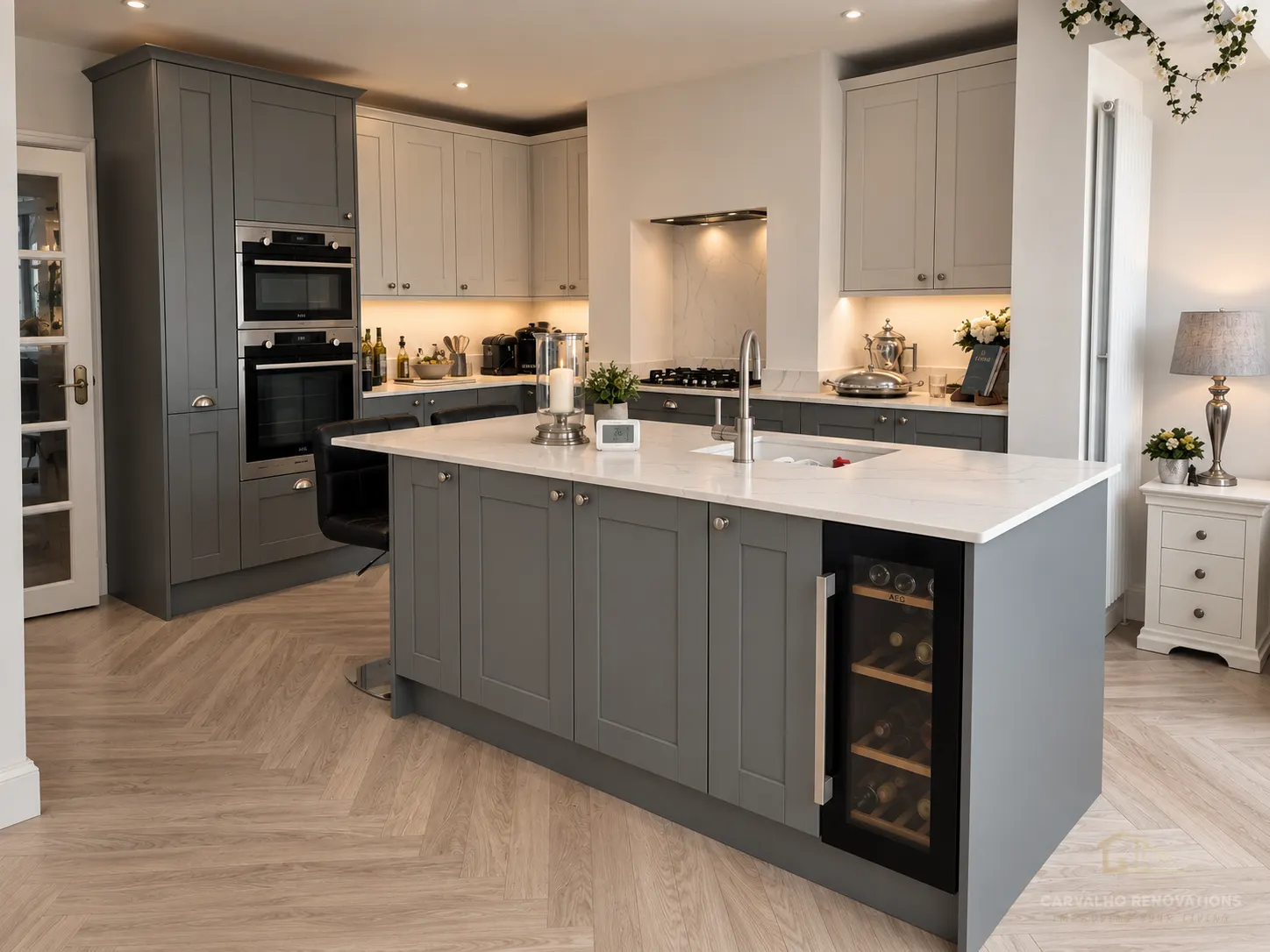
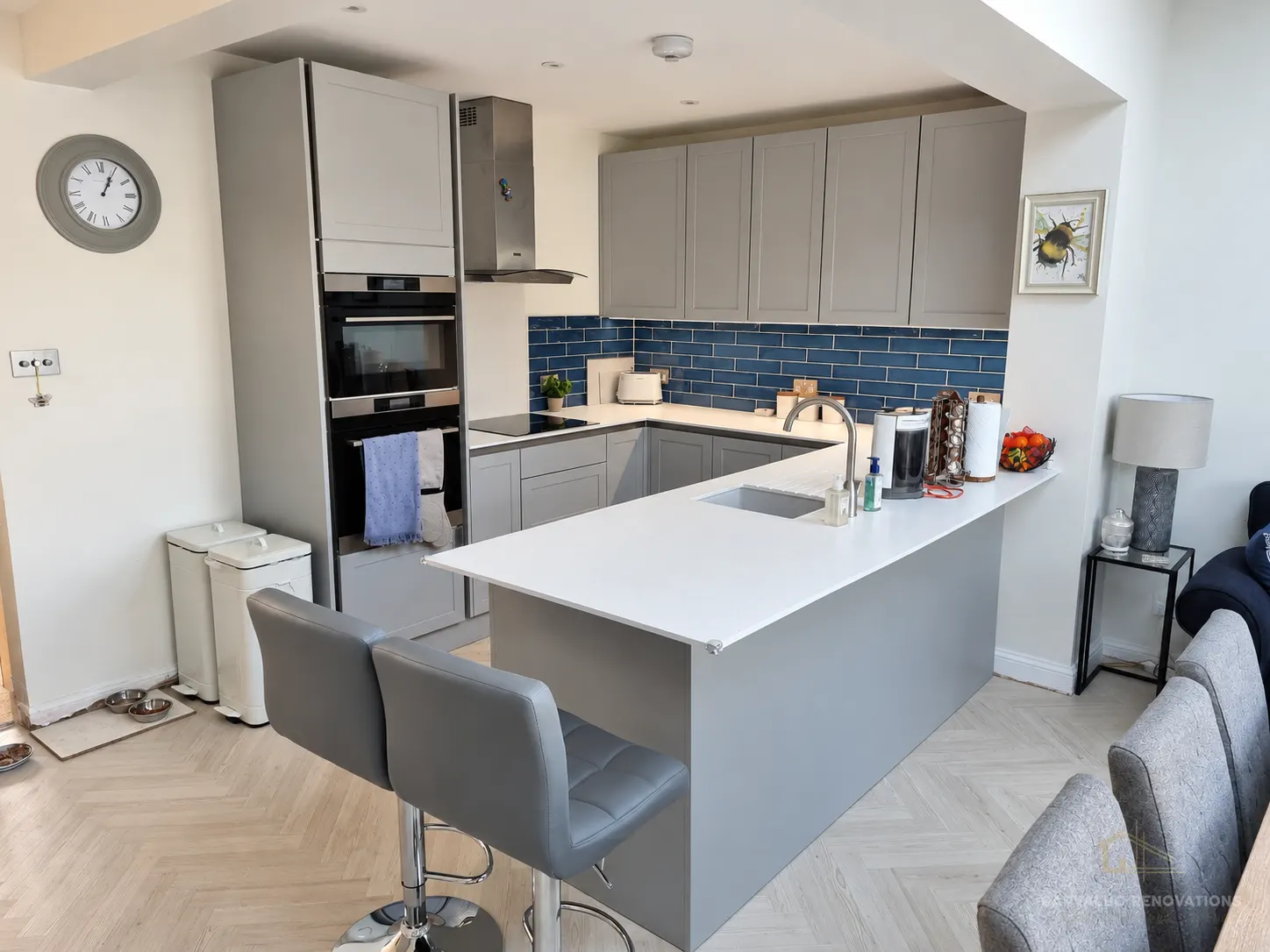
See our work
Related articles
How Much Does a Kitchen Renovation Cost in the UK?
Kitchen renovation costs vary more than almost any other room in the house — mostly down to units and appliances, not labour. Realistic UK ranges and what actually drives the price.
How Long Does a Kitchen Renovation Take?
A realistic week-by-week view of how long a kitchen renovation actually takes, and what stretches the timeline beyond the fitting itself.
Labour vs Materials: How Renovation Costs Actually Break Down
Where does the money in a renovation quote actually go? The labour-to-materials split varies a lot by project type — and knowing it tells you where you genuinely can save, and where you shouldn't try.
Want a fully itemised quote?
See labour and materials broken out separately, not guessed at — get a free, no-obligation quote.
Get a Free Quote