Tile remains the most popular UK kitchen splashback material because it's affordable, heat-resistant and easy to repair in sections, but glass and acrylic splashbacks have grown in popularity for their seamless, easy-clean look. The right choice depends on budget, how much grout-cleaning you're willing to do, and whether you want a bold single-colour statement or a more traditional patterned finish.
Tile splashbacks
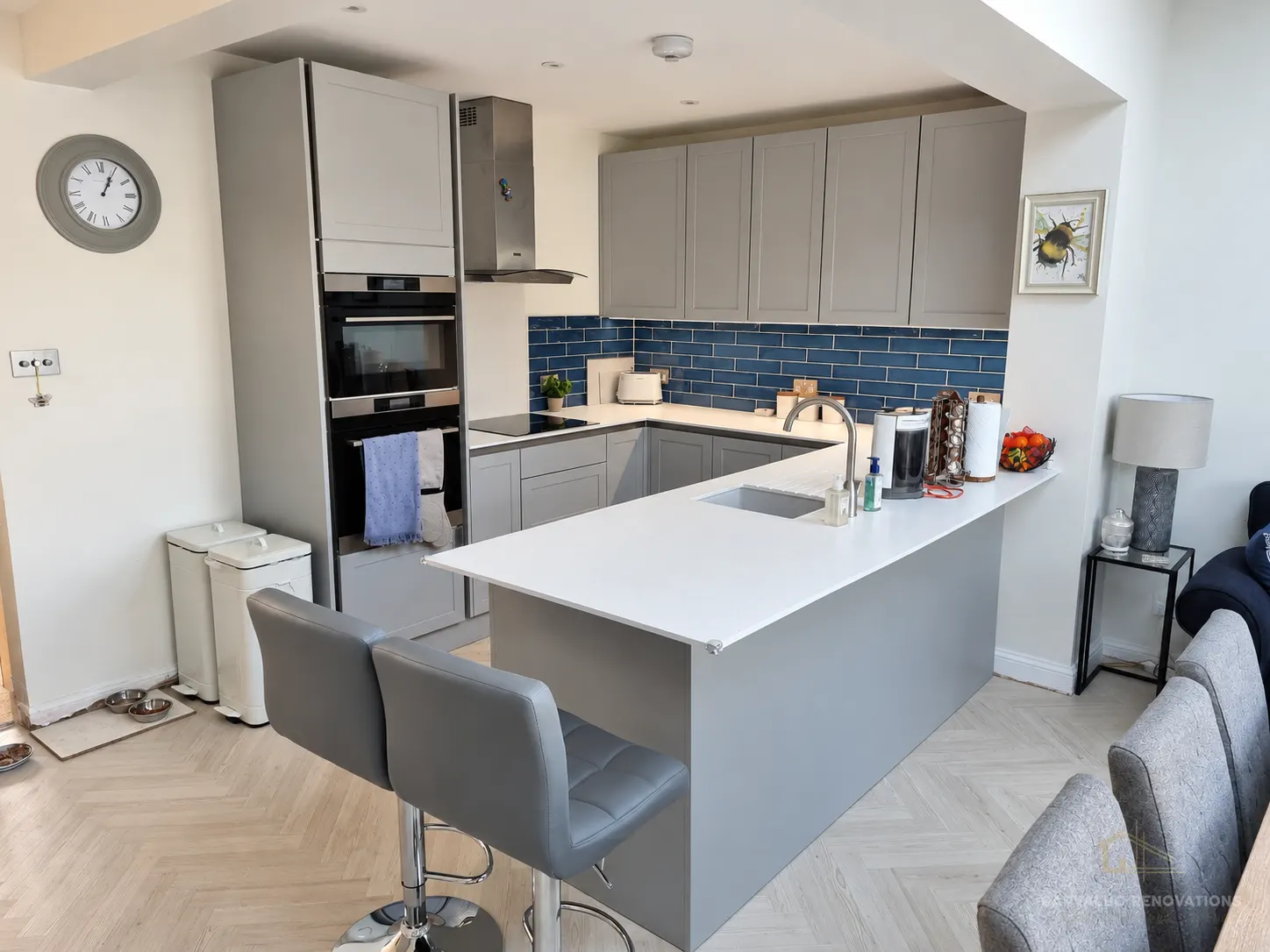
Typical cost: £40–£100 per square metre fitted, depending on tile choice. Tiles are heat-resistant, widely available in an enormous range of styles, and if one tile cracks, it can usually be replaced individually rather than redoing the whole splashback. The downside is grout lines, which need periodic cleaning and re-sealing to avoid staining, particularly directly behind the hob where grease builds up fastest. See our guide to kitchen splashback tiling costs for a fuller cost breakdown.
Glass splashbacks
Typical cost: £150–£350 per square metre fitted, usually toughened glass fixed with a coloured backing. Glass gives a completely seamless, easy-wipe surface with no grout to clean — a big practical advantage for anyone who cooks often. It's more expensive, needs to be professionally template-measured and fitted (it's cut to size for your exact hob and cutouts), and any damage typically means replacing the full panel rather than a small repair.
Acrylic splashbacks
Typical cost: £80–£200 per square metre fitted. Acrylic gives a similar seamless look to glass at a lower cost and is lighter and easier to install, but it's less heat-resistant and can be damaged by a pan or hot tray placed directly against it — it needs to sit a safe distance from direct heat sources, which limits how close it can go behind a hob compared with glass or tile.
Stainless steel
Typical cost: £100–£250 per square metre. A durable, fully heatproof, professional-kitchen option, though it shows fingerprints and marks readily and suits a more industrial-style kitchen than most other finishes.
What to consider before choosing
- Behind the hob specifically: tile, glass or stainless steel are the safer heat-resistant choices; acrylic needs a heat-resistant strip or extra clearance directly behind gas or high-power induction hobs.
- Maintenance tolerance: glass and acrylic wipe clean with no grout to scrub; tile needs occasional grout cleaning and resealing.
- Budget and repairability: tile is cheaper and easier to patch if damaged; glass and acrylic are typically a single fitted panel, so damage usually means full replacement.
Whichever material you choose, get it measured and quoted alongside your worktop and hob choice, since splashback and worktop material often get chosen together for a coordinated look.
Mixing materials for cost and effect
Many kitchens use different splashback materials in different zones rather than one material throughout — for example, a glass panel directly behind the hob for heat resistance and easy cleaning, with simpler tiling elsewhere. This can bring the overall cost down compared with a full glass splashback while still getting the practical benefit of glass exactly where it matters most.
Installation timing
Splashbacks are usually one of the last things fitted in a kitchen renovation, after worktops are in place and appliances are positioned, since glass and acrylic panels in particular are template-measured against the finished worktop and any cutouts needed for sockets. Factor a lead time of 1–3 weeks for a template-measured glass or acrylic splashback to be manufactured and fitted after the rest of the kitchen is otherwise complete.
Colour and pattern considerations
Glass and acrylic splashbacks are typically a single solid colour, which gives a clean, contemporary look but offers less scope for pattern than tile. Tiling allows for feature patterns — metro tiles, patterned encaustic-style tiles as an accent strip, or a herringbone layout — that some homeowners specifically want as a design feature rather than a purely practical surface. If you want a bold colour statement with zero maintenance, a coloured glass panel is usually the simplest way to achieve it.
Getting an accurate quote
Because glass and acrylic splashbacks are made to measure, always get a firm quote after final worktop and hob positions are confirmed, not before — cutouts for sockets, taps or a window sill can all affect the price, and changes after templating usually mean starting the process again.
Behind a gas hob specifically
UK building regulations and manufacturer guidance both require a minimum clearance between a gas hob and any combustible or heat-sensitive surface, so always check your chosen splashback material and its specified clearance distance against your hob manufacturer\u2019s instructions before finalising the design, particularly if opting for acrylic.
Frequently asked questions
Related calculators
Related services
See our work
Related articles
How Much Does Tiling a Kitchen Splashback Cost?
A tiled kitchen splashback typically costs £300-£900 fitted for a standard run behind the hob and worktop, depending on tile type and how much wall you're covering.
Kitchen Worktop Materials Compared: Cost, Durability, Look
Laminate, granite, quartz, solid wood and stainless steel worktops each trade off cost, durability and maintenance differently — here's how to choose.
Kitchen Cabinet Refacing vs Full Kitchen Replacement: Which Should You Choose?
Refacing cabinet doors can transform a kitchen's look for a fraction of the cost of a full replacement — but it isn't right for every situation.
Choosing a splashback for your kitchen renovation?
Carvalho Renovations can advise on the right splashback material for your hob, budget and overall kitchen design.
Get a Free Quote