Skip sizes are measured in cubic yards, and the range most homeowners choose from runs from a 2-yard mini skip up to an 8-yard builders skip. Picking the right size mostly comes down to being honest about how much you're actually clearing.
Use the calculator, or check the sizes below
Our Skip Size Calculator gives a recommendation by project type or estimated volume. Here are the standard UK sizes and what they typically suit.
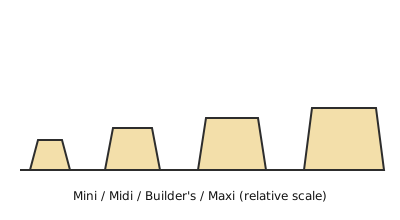
The standard UK skip sizes
- 2 yard (mini): roughly 1.83m × 1.22m × 0.86m, around 20-30 bin bags — small garden clearance, single-room DIY offcuts
- 4 yard (midi): roughly 2.44m × 1.52m × 1.07m, around 35-40 bin bags — a kitchen or bathroom refit, medium garden clearance
- 6 yard (builders): roughly 3.05m × 1.83m × 1.2m, around 60-70 bin bags — a single-room renovation or medium building work
- 8 yard (large builders): roughly 3.66m × 1.83m × 1.37m, around 80-90 bin bags — a house clearance or larger renovation
Matching skip size to common projects
- Clearing an old deck: a typical garden deck (see our decking guide if you're building a replacement) usually clears into a 4-6 yard skip, depending on the substructure — old joists and posts take up more volume than the boards alone.
- Kitchen or bathroom strip-out: typically 4-6 yards, more if old cabinetry, a bath and tiling all come out together.
- Garden clearance: a small clearance usually fits a 2-yard mini skip; a full garden clearance with shed removal often needs 6 yards or more.
- Single-room renovation: 4-6 yards covers most single-room strip-outs; a whole-house renovation is usually better served by several smaller skips over the project's phases than one oversized skip sitting on site throughout.
When in doubt, round up
An overfilled skip usually can't legally be collected — most companies won't take a skip loaded above its rim, for road safety reasons. A slightly under-filled skip is just a bit of spare capacity, which is always the safer side to be on.
Do you need a permit?
You need a permit if the skip goes on a public road or pavement — your skip hire company or local council issues this, and it's worth arranging a few days ahead since some councils take longer than others to process it. No permit is needed if it sits entirely on your own private driveway or land.
What can't go in a skip
Most skip companies won't take hazardous waste such as asbestos, paint tins, fridges/freezers, gas canisters, batteries or tyres — these typically need separate, licensed disposal routes. Always confirm the exact restricted list with your provider before loading anything you're unsure about, since it varies slightly between companies and local authorities.
Related reading: how much skip hire actually costs.
Frequently asked questions
Related calculators
Related articles
How Much Does Skip Hire Cost? Prices by Skip Size
UK skip hire costs by size, what affects the price, and when you'll need a council permit — with realistic price ranges for typical renovation and clearance jobs.
How to Choose the Right Screw or Fixing for the Job
A practical guide to choosing the right screw, wall plug, or fixing for common UK DIY jobs — matched to wall type and load, not guesswork.
How to Choose the Right Drill Bit Size
A quick, practical guide to matching drill bit size and type to the job — wall plugs, screws, masonry, wood and metal.
Got more than a skip-full to clear?
For a full renovation with a real clearance and waste plan built in, get a free, no-obligation quote.
Get a Free Quote