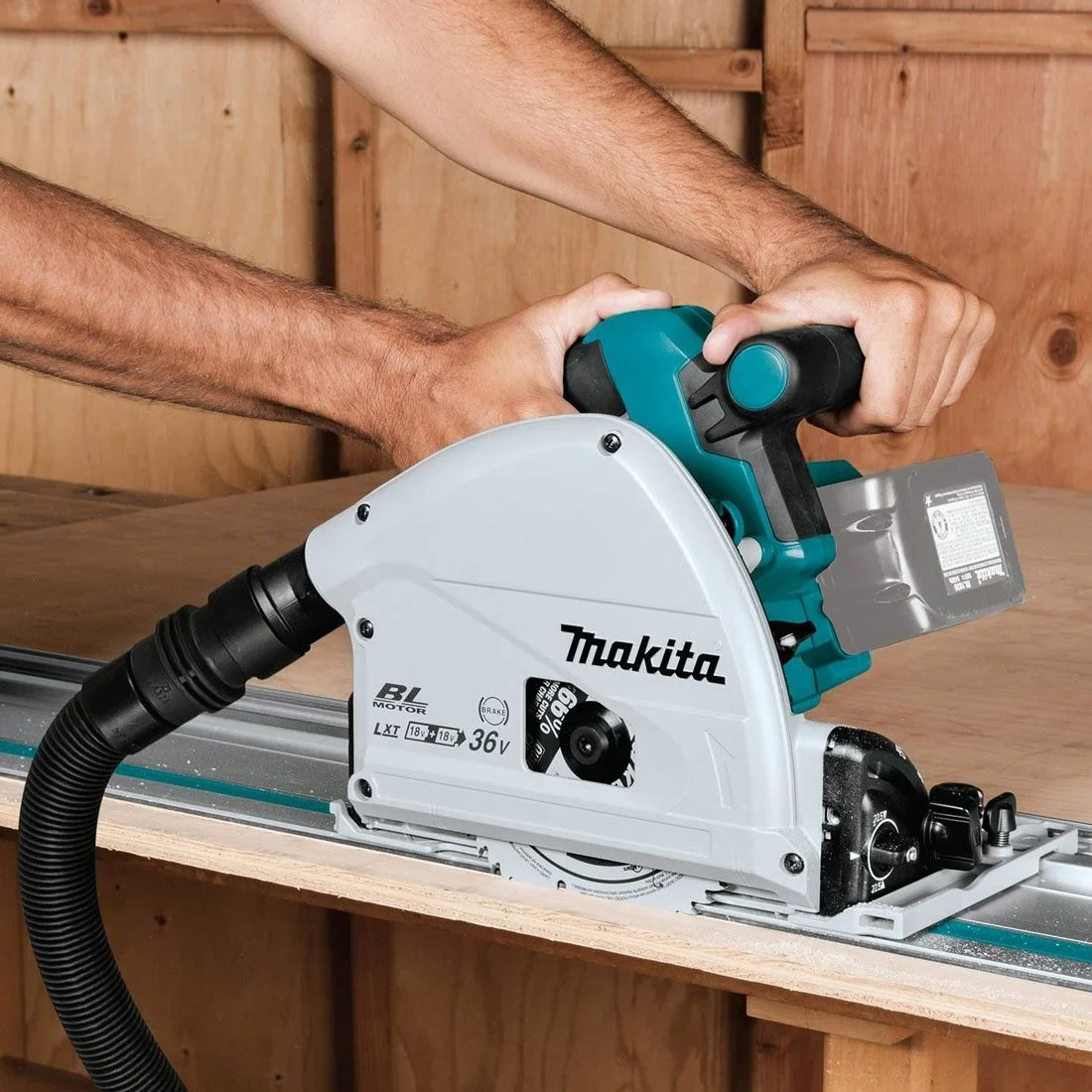
The Makita DSP601 is a cordless 36V (18Vx2 LXT) brushless plunge saw built for precise, splinter-free cuts in sheet materials, worktops, doors and flooring. Here's an honest, spec-accurate look at what it's good at, what to watch for, and whether hiring one makes more sense than buying.
What is the Makita DSP601?
It's designed to work with Makita's guide rail system for dead-straight cuts, and runs off two standard 18V LXT batteries rather than a single dedicated 36V pack — useful if you already own Makita 18V batteries from other tools.
Key specifications
- Motor: Brushless
- Power: 2 x 18V LXT batteries (36V combined)
- Weight: 4.4kg without batteries
- Blade diameter: 165mm, 20mm bore
- Maximum cutting depth: 56mm at 90°, 40mm at 45°
- Bevel range: -1° to 48°
- No-load speed: 2,500-6,300rpm, variable
- Soft start and electric brake: both included
What it's actually good at
This is a tradesperson's saw first, and it shows. It's genuinely well suited to kitchen worktop cutting, door trimming, flooring installation, sheet material breakdown, cabinet making and general joinery — precisely the jobs where a splinter-free, accurate cut matters more than raw cutting speed.
Realistic project examples
- Fitting a kitchen worktop: cutting laminate or solid-surface worktop to length and around sink/hob cutouts, where a clean, splinter-free edge on the visible face matters.
- Trimming doors: taking an internal door down to fit a new floor height or an out-of-square frame, without chipping the veneer.
- Flooring installation: cutting engineered or laminate flooring boards to size along a straight guide rail line.
- Sheet material breakdown: breaking a full sheet of MDF, plywood or OSB down into manageable, accurately-sized pieces before further work.
Safety considerations
Like any plunge saw, this tool needs the same basic precautions any circular/plunge saw does: check the riving knife and blade guard move freely before starting, clamp the guide rail securely rather than relying on hand pressure alone, keep hands clear of the cut line, and never remove the blade guard. Cutting MDF or treated timber produces fine dust — use the included dust extraction adapter connected to an extractor or a suitable vacuum, and wear a proper dust mask, particularly for MDF where the dust is a known respiratory irritant. As with all power tools, read the manufacturer's manual before first use.
Pros
- Genuinely clean, splinter-free cuts when used with a guide rail
- Cordless freedom without a big drop in cutting performance versus a corded plunge saw
- Uses standard 18V LXT batteries — flexible if you're already in the Makita ecosystem
- Decent cutting depth (56mm) for a compact saw, enough for most worktop and door work
- Dust extraction adapter included, which matters a lot for indoor cutting
Cons / things to know before you hire it
- Two batteries and a dual charger add weight and cost if you don't already own compatible Makita batteries
- A guide rail is genuinely necessary to get the accuracy this saw is capable of — freehand cuts don't show off what it does well
- Battery run-time varies significantly with material and cut depth, as with any cordless power tool — for a full day of continuous worktop cutting, budget for battery changes
Should you buy or hire?
At a typical retail price for a saw in this class, buying only makes sense if you're using a plunge saw regularly — ongoing kitchen fitting, flooring installation or joinery work. For a one-off job (fitting a single kitchen, trimming a few doors, a flooring project), hiring is the more sensible option by a wide margin. This exact saw is available to hire directly — see the Makita 18Vx2 LXT Brushless Plunge Saw hire listing for current pricing and availability, or read our carpentry and joinery cost guide if you're weighing up whether to DIY or bring in a professional for the wider job.
Alternatives to consider
If you don't already use Makita's 18V battery platform, it's worth comparing against other manufacturers' plunge saws in the same class before committing to buy — but for a one-off or occasional job, that comparison matters far less than simply hiring the right tool for the day.
Related reading: the essential tools most DIY homeowners should own.
Frequently asked questions
Related tools you can hire
Ready to hire the Makita DSP601?
Book it online in minutes — collection and delivery available.
Hire This Saw Now